
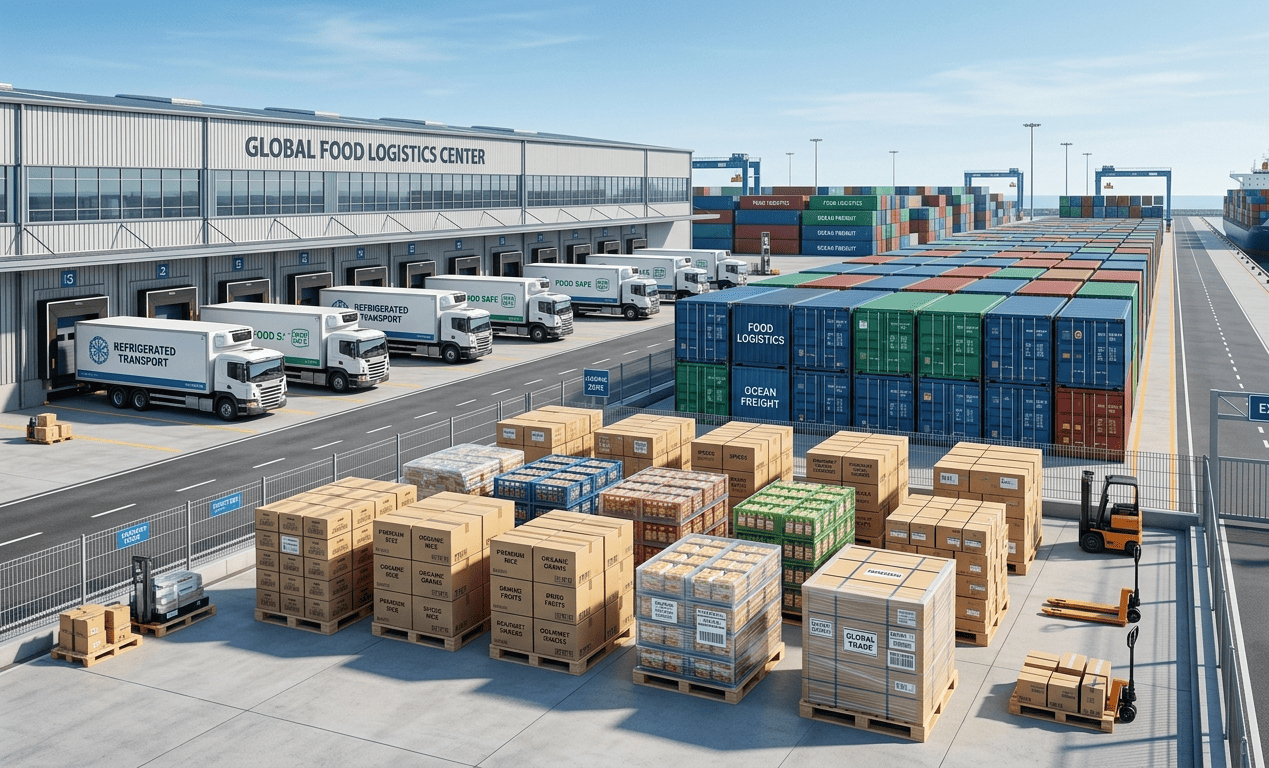
In international food trade, logistics efficiency is essential for maintaining product quality, delivery schedules, and supply chain reliability. Businesses that manage shipping and coordination effectively reduce delays, lower operational risks, and improve customer satisfaction.
As food products often require careful handling, storage, and transport planning, supply chain visibility has become increasingly important for global trade success.
The Role of Logistics in Food Distribution
Food logistics involves supplier coordination, shipment scheduling, packaging control, documentation support, and delivery monitoring. Each stage directly affects product safety and commercial performance.
For importers and wholesale buyers, timely shipment planning and customs clearance support are key to avoiding disruptions and maintaining inventory consistency.
Reliable logistics systems also help businesses respond quickly to changing market demands and customer requirements.
Building Reliable Supply Chains for Long-Term Growth
Strong logistics coordination supports long-term commercial success by improving trust between suppliers, distributors, and buyers.
Businesses that invest in clear supply chain communication and operational planning are better positioned to manage international trade efficiently.
A dependable logistics framework not only improves delivery outcomes but also strengthens overall business competitiveness in the global food market.

This is a great reminder that financial planning isn’t just about numbers; it’s about aligning your money with your life goals. Physician Lifecycle Planning can help you make the most of your earning potential while ensuring you’re also prioritizing your well-being and quality of life.